
What are enzymes?
Enzymes are biological catalysts. There are optimum temperatures and pH values at which their activity is greatest. Enzymes are also proteins, and usually denatured above about 45ºC.Enzymes are important in respiration. Aerobic respiration releases energy from glucose.
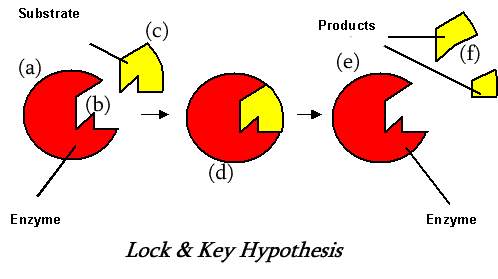
Enzymes are biological catalysts - catalysts are substances that increase the rate of chemical reactions without being used up. Enzymes are also proteins that are folded into complex shapes that allow smaller molecules to fit into them. The place where these substrate molecules fit is called the active site.
The animation shows how this works. In this example, two small molecules join together to make a larger one.
If the shape of the enzyme changes, its active site may no longer work. We say the enzyme has been denatured. They can be denatured by high temperatures or extremes of pH. Note that it is wrong to say the enzyme has been killed. Although enzymes are made by living things, they are proteins, and not alive.
Temperature and enzymes
As the temperature increases, so does the rate of reaction. But very high temperatures denature enzymes.The graph shows the typical change in an enzyme's activity with increasing temperature. The enzyme activity gradually increases with temperature until around 37ºC, or body temperature. Then, as the temperature continues to rise, the rate of reaction falls rapidly, as heat energy denatures the enzyme.

Temperature and enzyme activity
pH and enzymes
Changes in pH alter an enzyme’s shape. Different enzymes work best at different pH values. The optimum pH for an enzyme depends on where it normally works. For example, intestinal enzymes have an optimum pH of about 7.5. Enzymes in the stomach have an optimum pH of about 2.

pH and enzyme activity

